The woad and the blue jeans
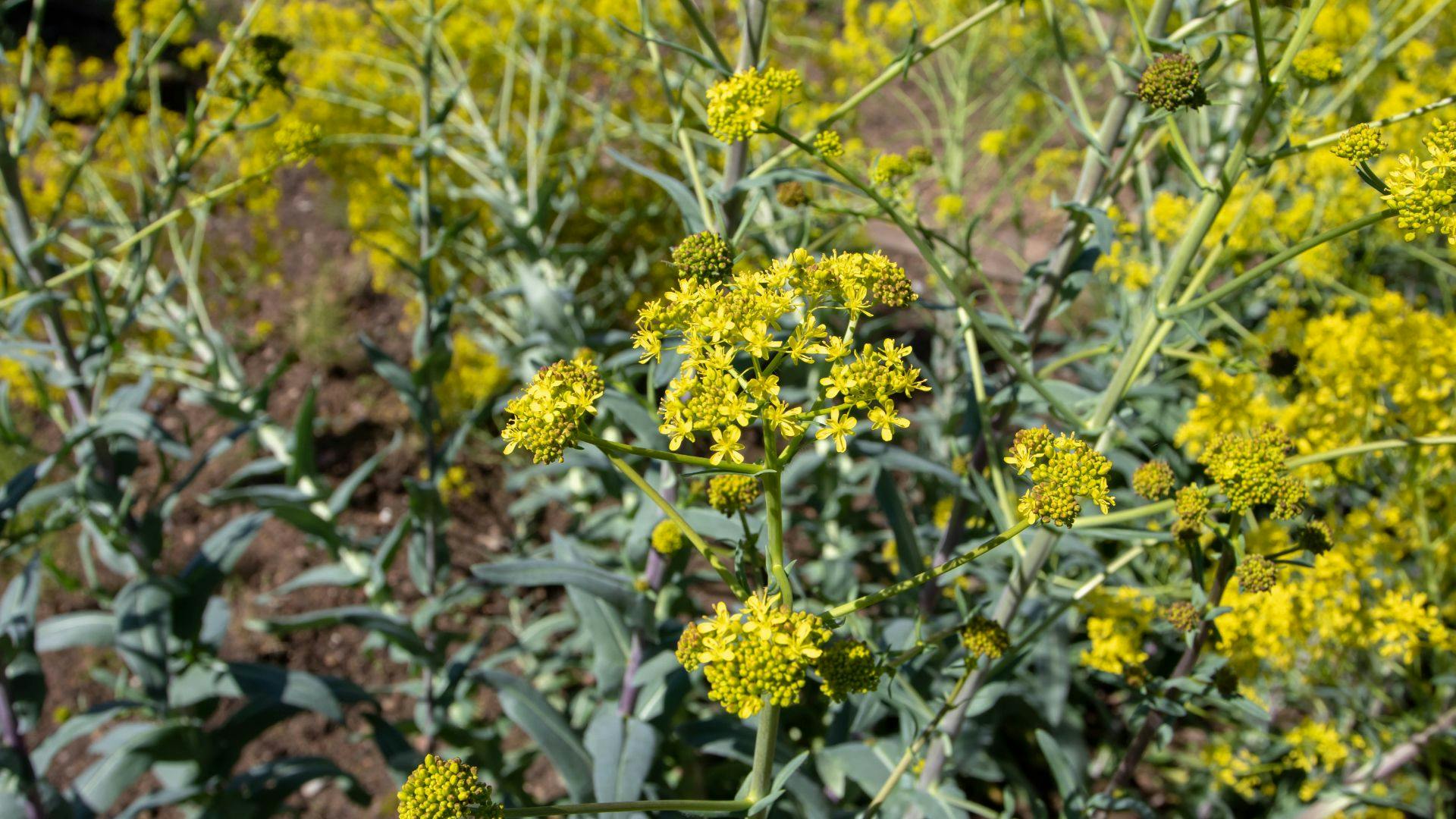
Woad (Isatis tinctoria) is a herbaceous plant belonging to the Brassicaceae family, cultivated since ancient times as a dye plant.
From its leaves, people obtained a valuable natural blue pigment, widely used until the 19th century, when it was gradually replaced first by indigo and later by synthetic dyes.
In the Middle Ages, woad brought prosperity to Castelnuovo Scrivia, where the plain offered ideal conditions for its cultivation and processing.
The plant’s leaves were harvested, dried, and then fermented: the blue color was produced through a natural chemical reaction triggered by urine, which was used to activate the transformation of plant matter.
The process was long and complex, but the result — a deep, bright, and durable blue — was so valuable that it became a true currency of trade, sought after throughout Europe.
The famous blue jeans also owe their name to this pigment: the expression “blue of Genoa” (bleu de Gênes in French) refers to the port of Genoa, from which ships loaded with fabrics dyed with this blue set sail for America.
Many of those ships carried pigments and cloths produced in the plains around Tortona and Castelnuovo Scrivia.
Even today, a fascinating trace of this history remains in Castelnuovo Scrivia:
inside the Oratory of San Rocco, a painting made with natural pigments, including the blue extracted from woad, still survives — a vivid reminder of a time when plants colored life and sustained the work of local communities.